NetSkill Wins Google For Startups Grant Of $350k!
Learn More >From Busy to Productive: Building a Personal Productivity System at BigTec
Overview
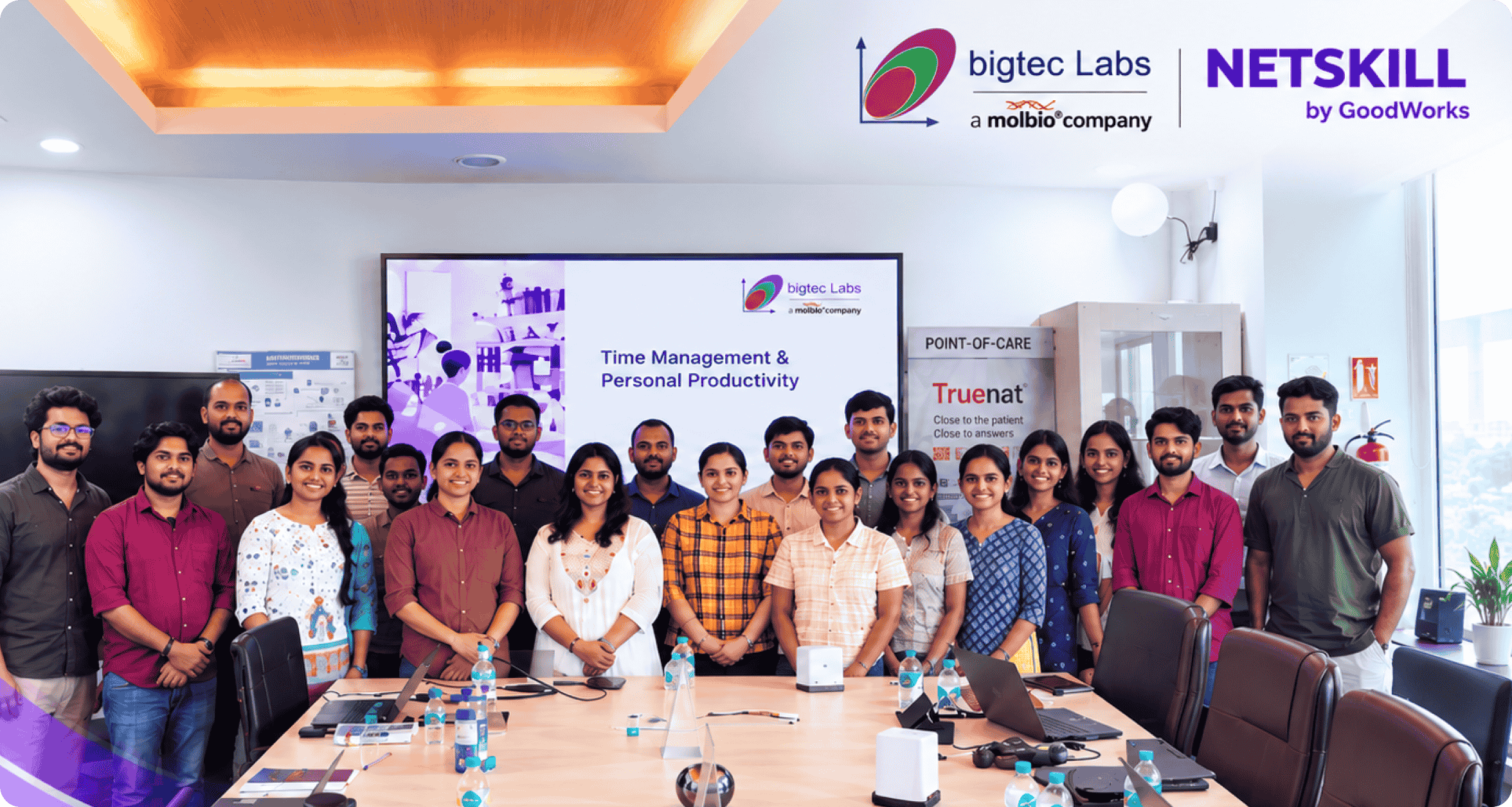
In a fast-moving MedTech workplace, being busy is not the same as being productive. BigTec
partnered with NetSkill to deliver a one-day Time Management and Personal Productivity
programme that helps employees plan their work at a weekly level, prioritise competing demands,
protect time for high-value work and manage everyday productivity challenges such as email,
meetings, interruptions and unplanned requests. The programme was built around simple tools,
templates and techniques that participants could apply in their day-to-day work straight away.
The Challenge
Employees in cross-functional MedTech roles face constant demands on their time. Overlapping
project deadlines, urgent customer and stakeholder requests, a high volume of emails and meetings,
last-minute changes and frequent business travel can make it hard to focus on what matters most.
BigTec wanted its people to be able to:
• Distinguish between being busy and being productive
• Prioritise effectively when managing multiple competing demands
• Plan the week around key outcomes rather than reacting day by day
• Protect time for important work and reduce context switching
• Handle email, meetings, interruptions and ad-hoc requests more effectively
• Stay productive while travelling or working across locations
Rather than introducing a complex methodology, BigTec wanted a simple, sustainable system that
fits the realities of a fast-paced workplace.
Objectives
The programme aimed to help participants:
• Identify personal and workplace productivity challenges.
• Prioritise work that creates the greatest value.
• Develop a structured weekly work-planning routine.
• Translate priorities into specific actions and realistic time commitments.
• Use time-blocking, focus periods and task batching to improve execution.
• Manage email, meetings, interruptions and ad-hoc requests more effectively.
• Apply productivity practices while travelling or working across locations.
• Leave with an individual action plan for immediate workplace application.

The Approach
1. A Simple Productivity Framework
The programme introduced a six-stage productivity cycle that participants can use well beyond the
training room: Capture, Clarify, Prioritise, Plan, Execute, Review. Each stage is anchored by a simple question, such as “What matters most?” and “How will I protect focus and get it done?”.
2. Experiential, Application-Led Delivery
The one-day workshop was designed with an emphasis on application rather than theory:
• 30% Learn: short facilitator-led inputs, frameworks and demonstrations
• 20% Discuss: workplace scenarios, peer discussion and reflection
• 50% Apply: individual exercises, simulations, planning activities and creation of personal
productivity tools
Participants were encouraged to use their own current priorities and workload in selected exercises, so the learning translated directly into their work.
3. Eight Practical Modules
• From Busy to Productive: productivity versus activity, multitasking, and reactive versus
proactive working (Personal Productivity Audit)
• Prioritising What Matters: urgent versus important, and Do / Defer / Delegate / Drop
(Priority Matrix Exercise)
• Weekly Work Planning: key outcomes, deadlines, dependencies, buffers and workload
mapping (Build Your Weekly Work Plan)
• Turning Plans into Action: next actions, time estimation, time blocking, focus blocks and
batching (Time-Blocking Exercise)
• Managing Productivity Killers: email overload, digital interruptions, meetings, context
switching and unplanned requests (Email and Meeting Makeover Simulation)
• Productivity While Travelling: planning around travel, high- versus low-focus work and
transition time (Travel-Day Productivity Challenge)
• Building Your Personal Productivity System: the
Capture–Clarify–Prioritise–Plan–Execute–Review cycle and weekly review (Personal
Productivity Dashboard)
• Action and Commitment: habit formation, implementation barriers and personal
commitments (30-Day Productivity Action Plan)
4. Practical Tools and Templates
Participants worked with simple tools they could adapt to their existing ways of working:
• Prioritisation: Urgent–Important Matrix, Priority Ranking Framework, Top 3 Outcomes
• Planning: One-Page Weekly Work Planner, Daily Action Planner, Time-Blocking Template,
Workload Mapping
• Execution: Next-Action Technique, Focus Blocks, Task Batching, Delegation Framework
• Communication and meetings: Email Triage (Delete, Do, Delegate, Defer), Meeting
Effectiveness Checklist, Commitment and Follow-up Tracker
• Travel and flexible working: Travel-Day Productivity Planner, High-Focus versus Low-Focus
Work Map
• Review: Weekly Review Template, 30-Day Productivity Action Plan
Execution
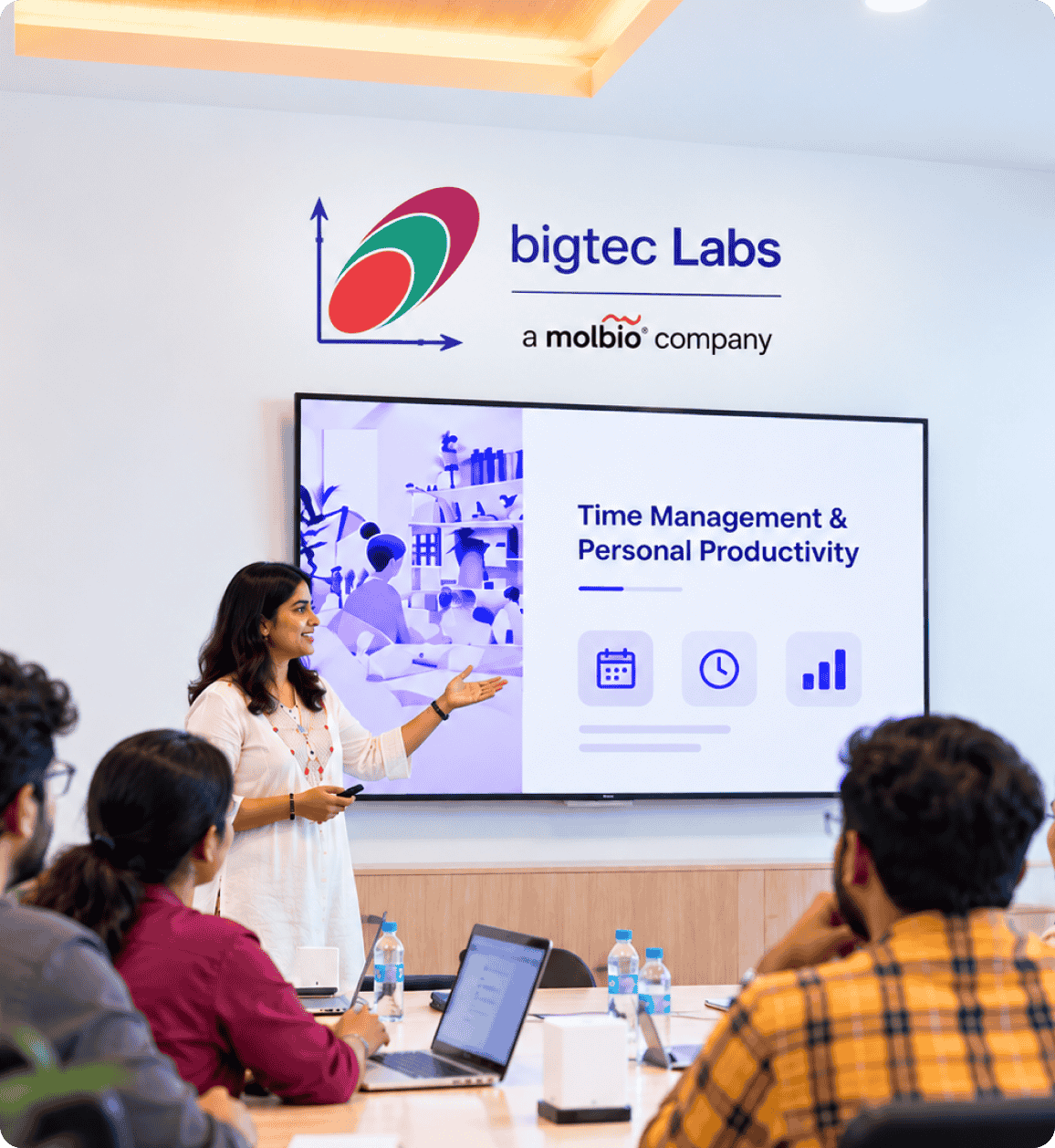
The programme ran as a single full-day workshop (9:00 to 5:00). It opened with a personal
productivity audit, so participants could see their own patterns before learning new techniques.
They then moved through prioritisation with the Urgent–Important Matrix and Do / Defer / Delegate / Drop decisions, built a one-page weekly plan, and practised time-blocking and focus blocks. The afternoon concentrated on the everyday disruptions that erode productivity: an email and meeting makeover simulation, and a travel-day challenge on planning around changing schedules and transition time. Activities and case studies reflected situations familiar to cross-functional teams, such as overlapping project deadlines, urgent stakeholder requests, last-minute changes and priorities shifting during the week. The day closed with participants building a personal productivity dashboard and committing to a 30-day action plan.
The Results
Participants left with a practical approach and a set of working tools, ready to apply from the next
working day.
Productivity Gains
• A prioritised workload based on impact and consequences
• A structured weekly plan built around key outcomes
• Practical use of time-blocking, focus periods and batching
• A clear way to decide what to do, defer, delegate or drop
Operational Efficiency
• Better handling of email, meetings and interruptions through triage and checklists
• Reduced context switching through protected focus time
• A weekly review rhythm for closing loops and planning ahead
• A commitment and follow-up tracker to keep agreements visible
Better Planning While Travelling
Participants learned to separate high-focus from low-focus work, plan around travel and transition time, and prepare offline work, so that productivity is sustained when schedules change.
A Sustainable Personal System
Instead of a one-off set of tips, participants built their own
Capture–Clarify–Prioritise–Plan–Execute–Review system and a 30-day action plan to embed new habits and anticipate implementation barriers.
Business Impact
The programme supports BigTec in moving employees from reactive busyness to intentional
productivity. Key outcomes included:
• A shared, simple productivity language across functions
• Clearer priorities and more focus on high-value work
• More effective handling of meetings, email and unplanned requests
• Better planning and continuity for employees who travel or work across locations
• Individual action plans that support habit formation after the session
• A shift in mindset from “I have too much to do” to “I know what matters, when I will do it,
and what I can defer, delegate or decline”
Why This Worked
The success of the initiative was driven by:
• A simple, memorable framework that is easy to sustain
• A 50% application approach built on participants’ own priorities and workload
• Practical templates that can be adapted to existing ways of working
• Scenarios reflecting the realities of a cross-functional MedTech workplace
• Coverage of travel and flexible working, not just office routines
• A 30-day action plan that extends the learning beyond the workshop
• Strong partnership between NetSkill and BigTec
Looking Ahead
With a personal productivity system in place, BigTec’s employees can keep refining their planning, focus and review habits through regular weekly reviews and their 30-day action plans. The same foundation can support further development in areas such as delegation, stakeholder management and team-level planning.

Want To Get In Touch With Netskill?
Let’s take your L&D and talent enhancement to the next level!
Fill out the form and our L&D experts will contact you.

NetSkill Enterprise Learning Ecosystem (LMS, LXP, Frontline Training, and Corporate Training) is the state-of-the-art talent upskilling & frontline training solution for SMEs to Fortune 500 companies.