Most founders think about compliance training after something goes wrong. A big client sends a security questionnaire. An employee raises a complaint. An auditor asks, “Can we see who completed the training?” By then, the answer is buried in spreadsheets and email threads.
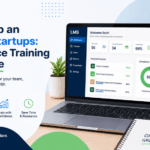
An LMS for startups fixes that early. It gives you one place to assign courses, track who finished them and pull a record when someone asks. In this guide, we cover which compliance training a young company needs in year one, how to choose a platform, and how to set it up without a dedicated L&D team.
Why an LMS for Startups Pays Off in Year One
Small teams often run on trust and quick chats. That works for product decisions. It doesn’t work for compliance, because the rules don’t shrink with your headcount.
Take India’s POSH Act. Employers with ten or more workers must constitute an Internal Committee. Section 19(c) requires employers to organise workshops and awareness programmes at regular intervals, and orientation programmes for committee members. A startup can cross the ten-worker threshold quickly during a hiring phase.
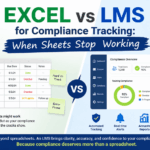
The bigger issue is proof. If you cannot show who completed training, it can be difficult to demonstrate that the required training took place. Some teams switch training tools mid-audit period and then can’t show who completed the earlier courses. A spreadsheet can cope with five people. It struggles with fifty people, three client audits and a new hire every week.
A learning management system (LMS) keeps the record from day one. When a customer, investor or regulator asks, you export a report instead of hunting for certificates.
Which Compliance Training Does a Startup Need in Year One?
Not every course on a vendor’s list applies to you. Some training comes from law, some from client contracts or certifications, and some is simply good practice. We label each as we go. Start with the ones tied to law, your contracts and the certifications you plan to get.
POSH and Workplace Conduct
Under the POSH Act, employers must run awareness programmes for their employees. You need awareness programmes for employees and orientation for committee members. The Act requires these programmes at regular intervals, but it does not prescribe the course format, duration or cadence. Annual refreshers are common good practice, not a fixed requirement. Many teams add the code of conduct here, along with anti-bribery and conflict-of-interest basics where they deal with vendors or government clients. Assigning this at joining is a common approach, and a yearly refresh is a sensible default.
Data Protection
India notified the Digital Personal Data Protection (DPDP) Rules, 2025 on 13 November 2025. Core obligations, including privacy notices, security safeguards and breach reporting, are scheduled to apply from 13 May 2027. Implementation timelines and regulatory guidance can evolve, so track updates from MeitY and the Data Protection Board rather than relying on a single date.
The DPDP framework does not prescribe a specific training course, but employee awareness is a practical safeguard for organisations handling personal data. If you serve EU or US clients, add privacy training where required by the client contract, applicable law or your certification programme.
Information Security Awareness
If you pursue ISO 27001, security-awareness training maps directly to Annex A control 6.3, “Information security awareness, education and training,” in ISO/IEC 27001:2022. Organisations seeking certification commonly maintain records showing that personnel completed relevant awareness and training. For SOC 2, training is commonly expected as part of a company’s control environment, although the Trust Services Criteria do not name it as a standalone requirement. SOC 2 auditors commonly look for evidence that employees understand their security responsibilities, so maintain per-person training records.
Cover phishing, passwords, device rules and how to report an incident. As a recommendation, not a legal requirement, have new hires finish this in their first week, before they touch customer data.
Role-Based Modules
Role-based modules are good practice rather than a legal requirement, except where sector rules apply. Sales teams need different rules than engineers. Finance needs fraud and payment controls. Field or factory staff may need safety training, depending on your sector and local rules. Keep these modules short and assign them by role, so nobody sits through content that doesn’t apply to them.
How to Pick the Best Compliance Training Platform for Your Startup
People often ask us, “What are the best compliance training platforms?” The best platform for you depends on how your company works. The best one depends on your team size, the audits you face and the budget you hold. So instead of ranking names, we suggest scoring any shortlist against these points:
- Auto-assignment: Courses should go out by role and joining date, with no manual emails.
- Reminders and escalation: Overdue training should nudge the learner first, then the manager.
- Audit-ready records: Look for timestamps, quiz scores, course versions and exportable reports.
- Certificates: Learners and auditors should get proof in one click.
- Content flexibility: You should be able to upload your own policies and build short courses, not just buy a fixed library.
- Language support: Indian teams often need Hindi and regional-language modules.
- Integrations: A link to your HR system or single sign-on saves admin time every month.
- Pricing that scales: Per-active-user pricing often suits a team that may double in a year, though it depends on your contracts and volumes.
Run a two-week pilot with one real course, then ask each vendor for a sample audit report. The report tells you more than the demo. For a deeper look, read our complete guide to compliance training with an LMS.
Setting Up an LMS for Startups: A Step-by-Step Plan
You don’t need a six-month project. A focused team can finish the basics in a few weeks. These steps are our recommended approach, not legal requirements.
- List your obligations and name an owner for each. HR, a security lead or a founder can hold these. One name per item.
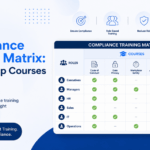
- Build a training matrix. Rows are roles, columns are courses, and each cell shows how often the course repeats.
- Create learner groups. Start with new hires, managers, engineers and sales.
- Add your content. We recommend turning each policy into a short module with a few quiz questions. Short modules tend to get finished.
- Set due dates and reminders. A common pattern, not a rule, is seven days from joining, with reminders before the deadline and an overdue list sent to managers.
- Test your evidence pack. Pick one employee, pull their record and check that it shows what an auditor would ask for.
- Review every quarter. Retire outdated courses and add new ones when a law or a client contract changes.
A Year-One Compliance Training Calendar
Treat this as a suggested sequence, not a legal timetable.
- Month 1: Map obligations, build the training matrix and choose a platform.
- Months 2 and 3: Set up groups, load the POSH, conduct and security modules, and assign them to all current staff.
- Months 4 to 6: Run the first committee orientation and awareness session. Pull your first completion report.
- Months 7 to 9: Add role-based modules. Update content for any new data protection guidance.
- Months 10 to 12: Run a mock audit, refresh the annual courses and plan year two.
Common Mistakes to Avoid
We see the same slips again and again. Teams train once and never refresh. They use one generic course for everyone. Nobody owns the programme, so reminders stop after a month. Certificates sit in personal drives instead of one system. And some teams change tools mid-year and lose the history.
We recommend picking a platform you can live with for at least two audit cycles. Moving later is possible, but it is easier to get right the first time.
Build Your Compliance Training on Netskill
Netskill says its LMS is designed to help growing teams assign, track, and report on training in one place. It also offers Genesis AI, an AI course authoring platform, which Netskill positions for turning policies into short courses with quizzes and multilingual narration. You can check how these features work for your needs in a demo or in the product documentation. Tell us which obligations you need to cover in year one, and we’ll show you how a setup could look.